Montenegro has for years been among the go-to places in Europe for buying property.
People from the region spotted the potential early on, and foreigners quickly followed. One small Balkan country turned out to be more attractive than many expected. According to the Central Bank, in just the first five months of 2025, 86% of all foreign investment in ownership went straight into real estate.
That tells you enough: houses and apartments on the Adriatic coast are a real magnet. The busiest markets are still Budva and the Bay of Kotor, with most buyers coming from Serbia, Germany, Turkey, the UAE, and also the US and UK.
And if you’re also thinking about taking that step and buying property in Montenegro, you’re in the right place. This guide walks you through how to buy property in Montenegro as a foreigner. We will talk about the practical steps, the costs, and the areas worth looking at in 2025.
Buying property in Montenegro: step by step
If you’re a foreign buyer planning to purchase property in Montenegro, the process isn’t complicated once you know the basics. Below you’ll find the main steps as they stand in 2025, based on the current laws and how deals are usually done in practice. Still, before signing anything, it’s always smart to double-check details with a local lawyer or a reliable agency.
Step 1: Define your goals, budget, and property requirements
First, decide what type of property you want. Is it an apartment, villa, house, or maybe land in a building zone? One, two, or more rooms? Is a balcony needed?
Choose locations you prefer. Is it coast, mountains, or inland? Each location has different price levels, rental potentials, and infrastructure.
Based on the property type, size, and location, you will be able to establish your budget not only for purchase price, but also for extra costs like taxes, notary fees, legal work, utility connections, maintenance, etc. Different sources suggest the total extra costs often come to ~3‑8% of the purchase price, but we will talk more about it later.
Step 2: Research the market and find real estate listings
When looking for Montenegrin real estate, use online platforms, portals, and local real estate agencies to browse what’s available in your target areas. Attend viewings in person if it’s possible. If it’s not, request detailed photos of a property or a video tour.
Investigate both upcoming developments and resale. New builds often come with VAT and possible delays. On the other hand, resale properties might need checks on permits and documentation.
Step 3: Engage a trusted local real estate agent
Choose a licensed agency with a good reputation. If they have experience with foreign buyers and transparent commissions, it’s a bonus. Montenegro Property is a safe choice with a large portfolio of homes and apartments across all regions and lots of experience with foreign clients.
The agent will help you with visiting properties, negotiating prices, liaising with the owner/seller, getting needed documents, etc.
Step 4: Due diligence / Legal checks
Before you make a formal offer, get these checked (usually via a local lawyer):
- Title verification — check if the seller is the registered owner, that there are no mortgages, encumbrances, or unpaid taxes.
- Building permits and zoning — check if the property has proper permits, if it is legally built, and whether the building classification matches the use.
- Restrictions on land types — foreign individuals generally cannot purchase agricultural land, forest land, or land in certain protected zones. For land plots, restrictions may differ.
By choosing a reliable real estate agency, you won’t have to worry about lots of these things because it is implied that the agent will check everything before even listing the property on their website.
Step 5: Make an offer and negotiate
Once you find a property you like, your agent will help you put forward an offer, often with a reservation deposit to take it off the market. Negotiate price, terms, who pays which fees (sometimes deposit, notary, agent commission, etc.).
Exchange a preliminary or reservation agreement if used in local practice.
Step 6: Financing / Mortgage (if needed)
If you plan to use a mortgage, check if Montenegrin banks lend to non‑residents and under what conditions. We will talk more about this later.
Alternatively, arrange financing via developer installment plans if available. Ensure exchange rates, bank fees, and fund transfer logistics are clear.
Step 7: Signing the contract & Payment
When legal checks are OK and offers are accepted, sign the Sales and Purchase Agreement. This is usually notarized.
You may need to deposit a percentage in escrow / into the notary scheme, depending on the agreement. The full payment (or agreed schedule) then needs to be made, usually by bank transfer.
Step 8: Notary and Registration
The sale agreement must be notarized. A notary confirms identity, verifies documents. If either buyer or seller is not present, a Power of Attorney (POA) can be used.
Once both parties sign the contract and the payment is made, the notary (or the parties via their lawyers) sends paperwork to the Real Estate Cadastre / Land Registry for title transfer.
Step 9: Pay required taxes and fees
Transfer tax (also called title transfer tax) is 3% of the market value in most resale transactions. If purchasing a newly built property, VAT may be applicable.
Prepare to pay notary fees, legal fees, registration (cadastre) fees, agent commission (depending on agreement), etc, as well.
Step 10: After the purchase — Utilities, residency, maintenance
- Change utility bills (water, electricity, local services) into your name.
- Register your ownership with the municipality and/or local authorities.
- If you want a temporary residency permit, look into property ownership implications.
- Consider ongoing costs: property tax, maintenance, and insurance.
If you’re not able to travel to Montenegro during the process, note that buying remotely with a Power of Attorney is also possible. We’ll explain how that works in one of the next sections.
How Long Does the Buying Process Take?
| Step | Description | Estimated Time |
| 1 | Define budget, research the market | 1–2 weeks |
| 2 | Engage a real estate agent | 1–3 days |
| 3 | View properties / remote tours | 1–3 weeks |
| 4 | Legal checks (title, permits, due diligence) | 5–10 days |
| 5 | Offer & negotiation | 2–5 days |
| 6 | Financing or transfer of funds | 1–2 weeks (varies by bank) |
| 7 | Sign the contract & notary appointment | 1–3 days |
| 8 | Registration in Cadastre (title transfer) | 5–15 working days |
| 9 | Payment of taxes and fees | 1–2 days |
| 10 | Utility transfer, post-purchase admin | 3–7 days |
| Total estimated time | 4–7 weeks (on average) |
How much does it cost to buy a property in Montenegro?
Property prices in Montenegro significantly vary depending on location. Depends on whether you’re looking to buy on the coast or inland. Also, the important factor is the type of property as well: you want a new build, resale, or are looking for a luxury villa?
Of course, features such as sea view, proximity to the beach, and infrastructure are also aspects to influence the price.
In popular areas along the coast, such as Budva, Kotor, and Tivat, the price per square meter is much higher for properties with sea views or those located on the first or second line from the shore.
In inland or hillside regions, the differences are significant, and you can end up paying two to three times less per square metre than on the coast.
New builds also usually come with additional costs of parking, shared facilities, etc., that can increase the overall price.
Here’s an overview of average prices and typical examples in 2025:
| Average Property Prices by Region and Type | |||
| Location / Property Type | Price per m² – New Build | Price per m² – Resale | Example: 3-Bed Apartment (≈ 80–100 m²) |
| Budva Riviera (Budva, Bečići, Rafailovići) | €2,500 – €4,200 | €2,000 – €3,500 | €220,000 – €380,000 |
| Bay of Kotor (Kotor, Dobrota, Tivat) | €2,500 – €4,500 (premium locations possibly higher) | €2,200 – €3,800 | €240,000 – €420,000 |
| Herceg Novi & surrounding coastal areas | €2,000 – €3,200 | €1,500 – €2,500 | €160,000 – €300,000 |
| Bar / Ulcinj Riviera | €1,500 – €2,200 | €1,200 – €1,800 | €130,000 – €200,000 |
| Podgorica (capital, urban areas) | €1,900 – €2,500 | €1,400 – €1,900 | €150,000 – €250,000 |
| Inland / Mountain regions (e.g. Kolašin, Žabljak) | €1,200 – €1,800 | €900 – €1,400 | €100,000 – €160,000 |
| Luxury villas or seafront properties (premium view, marina, Porto Montenegro, Luštica Bay) | €5,000+, and in top areas €9,000 – €15,000+ | Resale in these zones ara rare | €600,000 – €3,000,000+ |
Do I need to be a resident or have a visa for buying a house in Montenegro?
No, you don’t need it and you can freely purchase property in Montenegro without the need for residency or visa. The market is fully open to international buyers, and there are no restrictions based on nationality.
Foreign investments are actively welcomed, and buyers come from all parts of the world.
It is important to clarify, however, that buying property does not automatically grant residency or citizenship. The Citizenship by Investment program operated in Montenegro until 2022 when the EU made recommendations to end the scheme which granted passports to investors who bought real estate.
Today, property ownership on its own is a valid basis for applying for a temporary residence permit, which many foreign buyers use if they intend to spend an extended time in the country. The permit becomes valid for one year at a time and you must renew it every year as long as your property ownership status remains unchanged and all requirements are fulfilled.
To summarize, you do not need to be a resident to buy property in Montenegro, but it is important to know that residency and citizenship are now separate processes that require additional applications. It cannot be obtained automatically through a real estate purchase anymore since 2022.
Can foreigners own land in Montenegro?
There are some restrictions when it comes to buying land in Montenegro as a foreigner. The purchase of apartments and houses and commercial units remains unrestricted but land acquisition rules differ based on whether you buy as an individual or through a local company.
For Individuals:
Foreign individuals are restricted from buying certain types of land directly in their own name. This includes:
- Agricultural land exceeding 5,000 square meters
- Forests
- Land located on islands
- Property within 1 km of the national border
- Land inside national parks
- Sites of cultural or national security importance
If you are interested in agricultural or forest land, you can acquire up to 5,000 m² only if it is attached to a residential building (for example, a farmhouse with land).
For Companies
The rules are more flexible if you establish a Montenegrin legal entity (a company).
A locally registered company can purchase all types of land, including agricultural and forest land, without the limitations that apply to individuals.
Foreign investors who wish to start projects in tourism and agriculture and construction choose this path. Setting up a company in Montenegro is a relatively straightforward process, and ownership of the company can be 100% foreign.
Do I need a lawyer when buying a property in Montenegro?
The short answer is: No, it is not legally required to hire a lawyer for a property purchase in Montenegro, but it is strongly recommended.
Your advocate lawyer will protect your interests from start to finish throughout the legal process. The process includes verification of property ownership and examination of outstanding debts and mortgages and construction permits.
The sales contract review process ensures all terms are both enforceable and fair and transparent. The process requires special attention when dealing with resale properties and older homes that have no documentation and buildings located in areas with complicated building regulations.
You need legal representation to handle the transaction because you cannot be physically present in Montenegro. Your lawyer will have the authority to represent you through a power of attorney which enables them to interact with the notary and tax office and complete the entire purchase process from a distance. The payment for legal services provides clients with both peace of mind and protection from expensive errors that could occur during the process.
Can I buy property in Montenegro remotely?
Yes. Buying property in Montenegro without being physically present is possible, and many foreign buyers now choose this option.
The process needs a Power of Attorney (POA) which grants your lawyer or another trusted representative the authority to manage your affairs. This document must be notarised in your home country and, in most cases, apostilled before it can be used in Montenegro.
Your lawyer will take care of the entire process after authorization by handling due diligence and sales contract preparation and notary document signing and transfer tax payment and land registry ownership registration. International bank transfers function as the main payment system for all transactions because they enable secure payment tracking by sending funds directly to sellers or notary escrow accounts.
Can foreigners get a mortgage in Montenegro?
Foreigners can apply for a mortgage in Montenegro, but the process is much more demanding compared to local buyers. Only a few banks lend to non-residents, and most require a significant down payment. It’s typically 30–40% of the property’s value.
Interest rates are generally higher than in Western Europe. Usually, it’s 6–8%, and loan terms for foreigners may be shorter (5 to 10 years).
Every bank will ask you for proof of stable income and bank statements. Sometimes they can even require a collateral within Montenegro. The strict conditions of Montenegrin banks force most international buyers to choose between cash payments and home country financing options. The process of obtaining a Montenegrin bank loan for property purchase requires early planning and thorough preparation for extensive documentation.
What destinations in Montenegro are most popular to invest in?
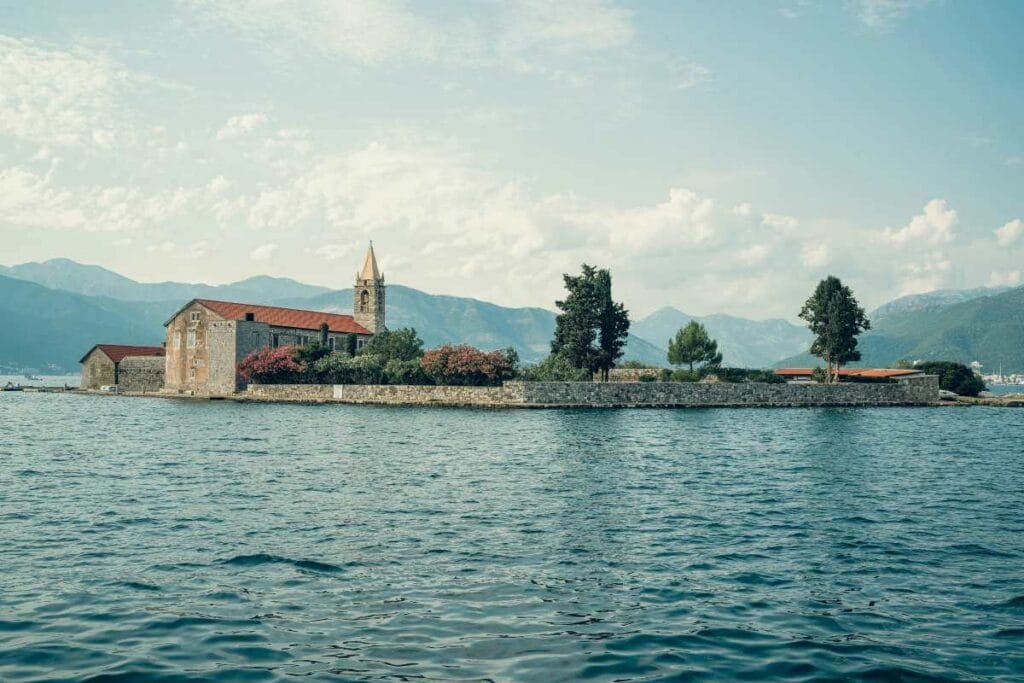
The most attractive areas for investment in Montenegro include the coastal regions of Ulcinj and Bar as well as the central and northern parts of the country.
The best area for your business depends on your specific goals because Montenegro has multiple markets with different advantages. Budva stands as the main tourist destination along the coast which generates the most rental interest during summer months while providing stable returns but at elevated costs.
Kotor and the Bay of Kotor appeal to buyers seeking history and charm, with strong appeal to cruise tourists and steady short-term rental demand. High-net-worth investors choose Porto Montenegro and Lustica Bay in Tivat for their luxury developments which offer top-tier investment possibilities.
And down the coast, there are more affordable, but equaly beautiful alternatives: Herceg Novi and Bar. Herceg Novi has a growing marina sector and good potential for rental income, while Bar is known for lower prices, good infrastructure projects and lot of visitors during the season.
The capital city of Podgorica generates stable rental income from long-term tenants who include both local residents, foreign expats and students although the rental returns remain lower than what tourist areas offer. The mountain towns of Kolašin and Žabljak present themselves as alternative travel choices for visitors who seek to visit during particular times of the year or require peaceful relaxation. These destinations are known for ski resorts and winter tourism, but still offer lower prices per square metre.
The coastal areas of Budva and Kotor and Tivat present short-term rental possibilities and appreciation potential yet Podgorica and mountain resorts provide stable investments with affordable entry points.
What are the current rental yields in Montenegro?
Montenegro’s average gross rental yield was approximately 5.62% as of Q2 2025, with potential for higher yields in coastal tourist areas. Rental yields in Montenegro vary a lot based on city, property size, and type. Coastal cities with developed tourism are really lucrative and can range from 5–6%. Meanwhile, the inland yield is lower, but the investment risk is as well.
| Average Gross Rental Yields by City (2025) | ||
| City | Gross Rental Yield (annual average) | Example Property / Comment |
| Podgorica | ~ 6.4 % | Apartments, 1–3 bedrooms; stable long-term rental market |
| Budva | ~ 5.9 % | Coastal apartments with high seasonal demand |
| Tivat | ~ 4.6 % | Luxury properties; high purchase prices reduce yields |
What taxes and fees do I pay?
If you’ve decided to buy Montenegro property, you probably want to know your total expenses. Here’s the list of all taxes and fees you will need to pay.
| One-off purchase costs (at completion) | ||
| Cost | When it applies | Typical amount |
| Property transfer tax (resale only) | Second and subsequent transfers of real estate (i.e., not first sale by a developer) | Progressive since 1 Jan 2024: 3% up to €150,000; then €4,500 + 5% of the amount over €150,000 up to €500,000; then €22,000 + 6% of the amount over €500,000. Payable within 15 days after completion. |
| VAT (new builds only) | First transfer of newly built units by a VAT-registered developer | 21% VAT (standard rate) applies to the purchase price; transfer tax does not apply to first sales. |
| Notary fee | All transactions (contract notarisation is mandatory) | Typically €350–€500 for mid-range properties, plus 21% VAT. |
| Lawyer (due diligence & completion) | May vary based on the case and location | Around €1,200 on average for a standard transaction. |
| Interpreter | If a party is a non-resident / doesn’t speak the local language | Typical guide: €20/page written; €50/hour oral; interpreter presence at signing is obligatory in these cases. |
| Land registry/cadastre admin | Title registration & extracts | Small fixed/administrative fees (vary by municipality; often bundled by the notary/lawyer). |
| Bank transfer / international wires | If paying from abroad or using escrow | ~0.25%–1% depending on banks/corridors. |
| Agency commission | Market practice | Typically paid by the seller (included in asking price); buyers do not pay a commission unless otherwise agreed. |
Can I get Montenegrin residency or citizenship by investment?
Montenegro does not grant automatic residency or citizenship simply by purchasing a property. However, there are two separate legal routes to consider: temporary residence and citizenship by naturalisation.
Residency through property ownership
Owning real estate in Montenegro is one of the most common and straightforward bases for obtaining a temporary residence permit.
- This permit is typically valid for one year and can be renewed annually as long as the property remains in your name.
- It allows you to stay in Montenegro beyond the normal tourist limit and to live there for extended periods.
- While it does not provide the same benefits as permanent residency, it is a practical solution for buyers who spend part of the year in Montenegro.
Citizenship by Investment (no longer active)
Montenegro briefly offered a Citizenship by Investment (CBI) program, launched in 2019. Through it, foreign nationals could obtain Montenegrin passports by investing in government-approved real estate projects and paying additional state fees.
However, under pressure from the European Union, the program was terminated at the end of 2022. Since then, there has been no direct citizenship route tied to property purchases.
Citizenship today
To acquire Montenegrin citizenship now, foreigners must go through the standard naturalisation process. That generally requires:
- Holding permanent residency (which itself requires at least five years of continuous temporary residency),
- Demonstrating integration into Montenegrin society, and
- Meeting conditions such as language and background checks.
In practice, most foreign property owners use their ownership to secure renewable temporary residence permits, and only a small portion pursue full citizenship years later via naturalization.
So, is buying property in Montenegro a good idea in 2025?
Yes! Buying property in Montenegro in 2025 is an excellent decision for foreign investors and people looking for a new home. The market operates with openness while showing competitive pricing relative to other Mediterranean locations and property ownership leads to permanent residency opportunities.
The European real estate market of Montenegro continues to attract strong tourism interest because of its beneficial tax environment and ongoing international appeal.